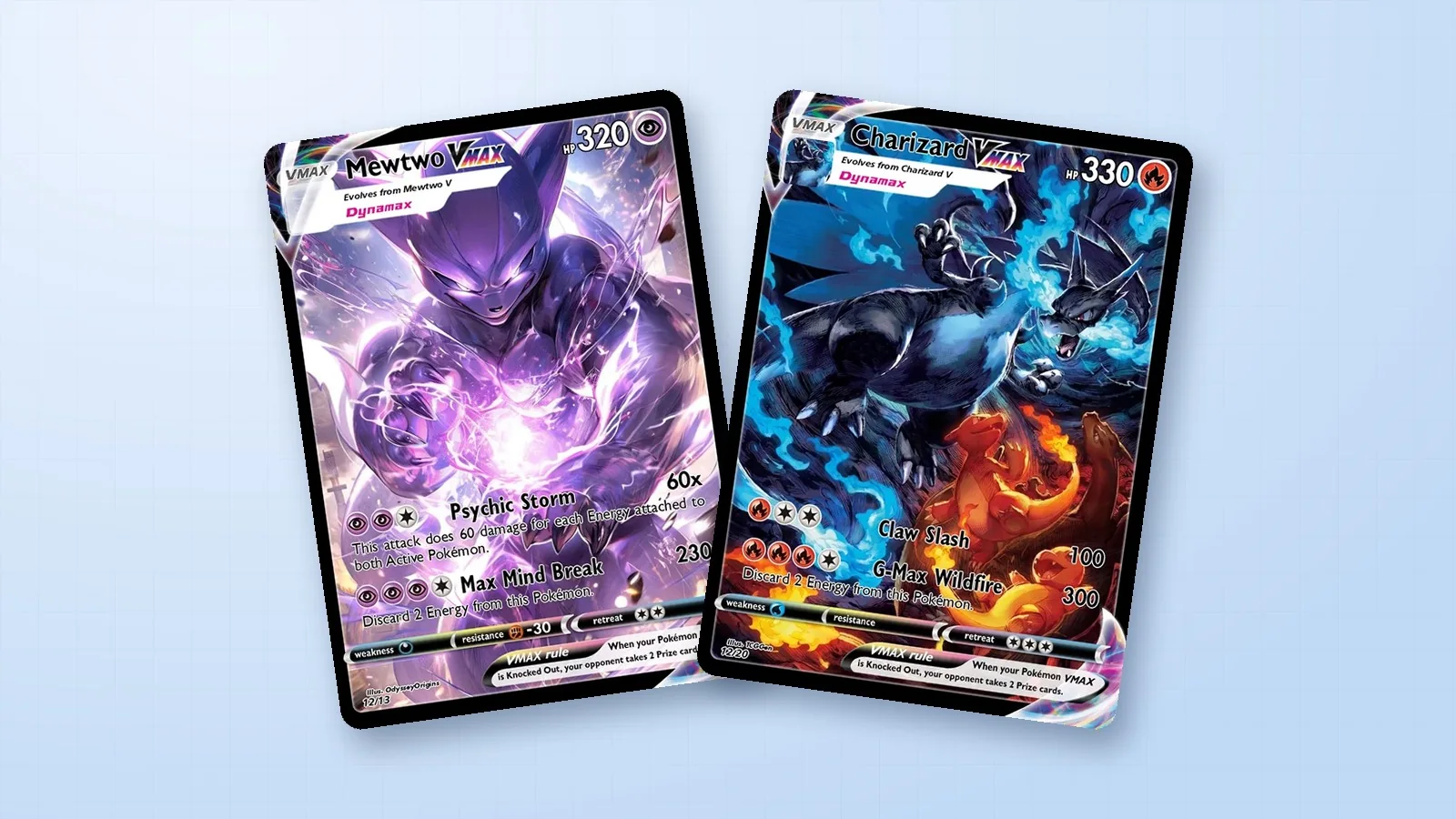
A VMAX design should make the jump from Pokémon V visible. In the Sword & Shield era, Pokémon VMAX evolved from their matching Pokémon V, and an opponent took three Prize cards when one was Knocked Out. That larger form gives you a good reason to rethink the artwork and the attack together. See the Pokémon TCG rulebook.
Start with the evolution line
In the TCGGen Pokémon Card Maker, select Sword & Shield under Card Series and the VMAX frame under Style. For a custom Avalugg VMAX, use Avalugg V as the Pokémon it evolves from. Check that the evolution line, name, and HP can all be read in the preview. Think about what should carry over from your Pokémon V version, such as the element and a color in the illustration.
Give the larger form a sense of scale
In Artwork, upload a scene with a point of comparison. A line of small trees at the foot of a giant Avalugg helps the reader see its size. Keep that detail inside the crop. Give the name area some breathing room and use a quieter patch of snow behind the attack text if your layout puts words over the art.
Build one attack around that change
Glacier Rampart could do 180 damage for two Water and one Colorless. Its effect could reduce the damage Avalugg takes from attacks by 30 during the opponent’s next turn. That lets the colossal form feel sturdy in both the illustration and the effect. Check the timing in Moves, then download the finished card and proof it at 63 × 88 mm. See the Pokémon Card Maker guide for download and print steps.
Three VMAX cards from the Library
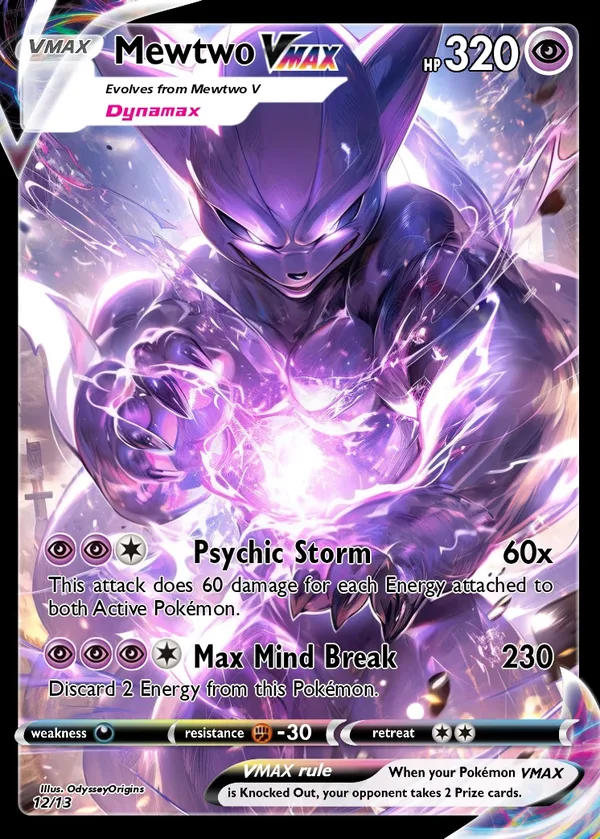
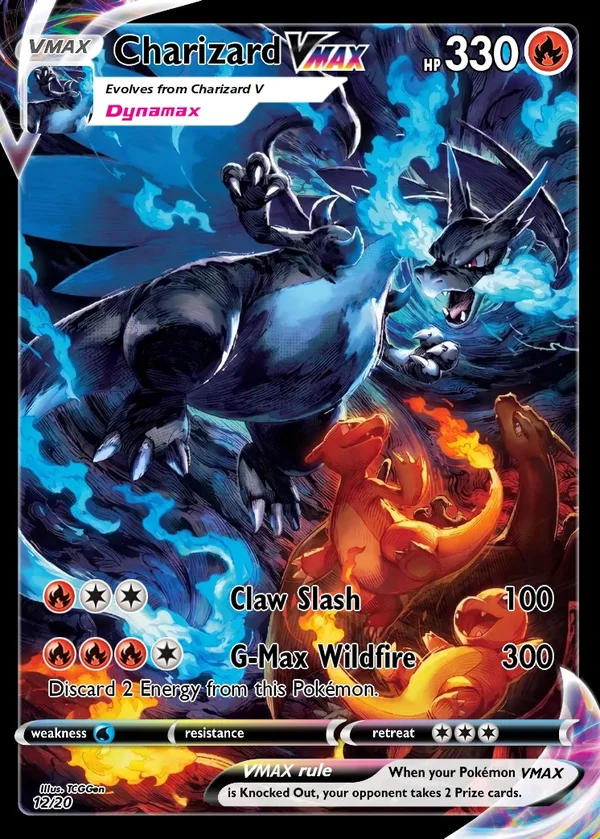
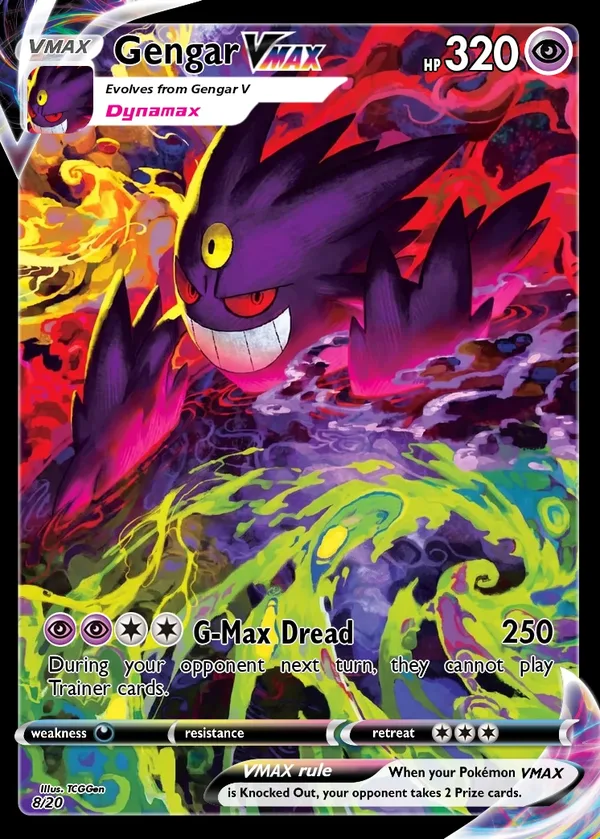
Look at Mewtwo VMAX, Charizard VMAX, and Gengar VMAX for three ways to give the main figure room while preserving the evolution line and rule strip.
Mewtwo VMAX · Charizard VMAX · Gengar VMAX